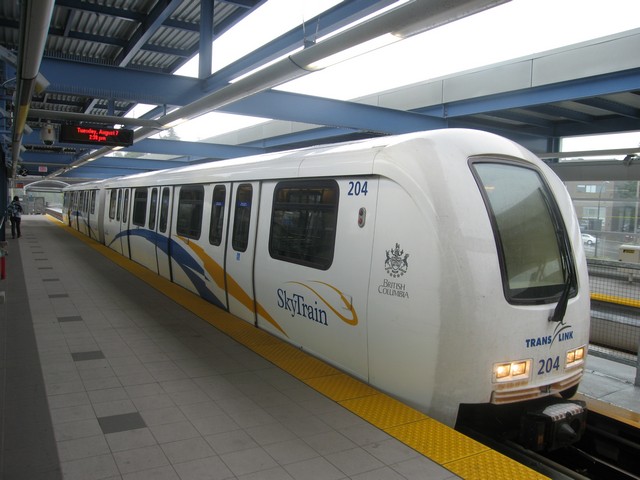
Just in time for the summer travel season, Winter 2018 photos have been posted!

The first part of 2018 here at Oren’s Transit Page headquarters has been busy.  The next few months also have some travel planned both to places I’ve been before as well as new ones, but in this post, I wish to let everyone know that new photos from the past few months from a variety of places are now available on this site.  You may have noticed some recent photos of the month were from locations that had not been featured on any part of this site before.

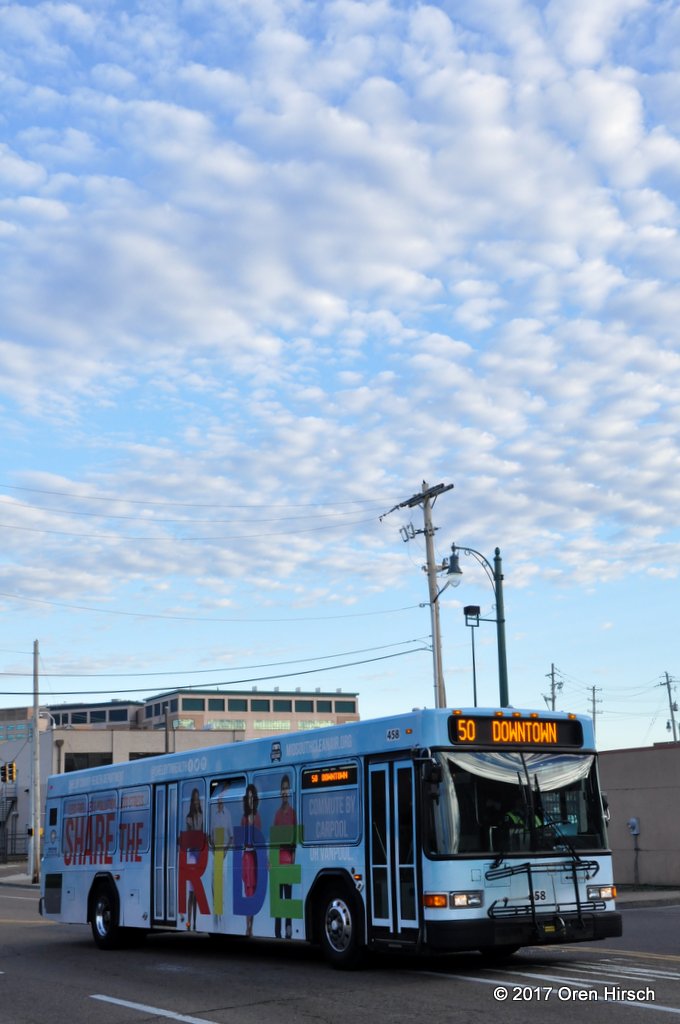
I made my first trip to Memphis, Tennessee back in November 2017.  Unfortunately, it was before that city’s Main Street Trolley reopened, but I guess that just means I’ll have to go back some day.  However, I did get some photos of MATA’s all Gillig bus fleet, which you can find in the new Memphis section on this site.
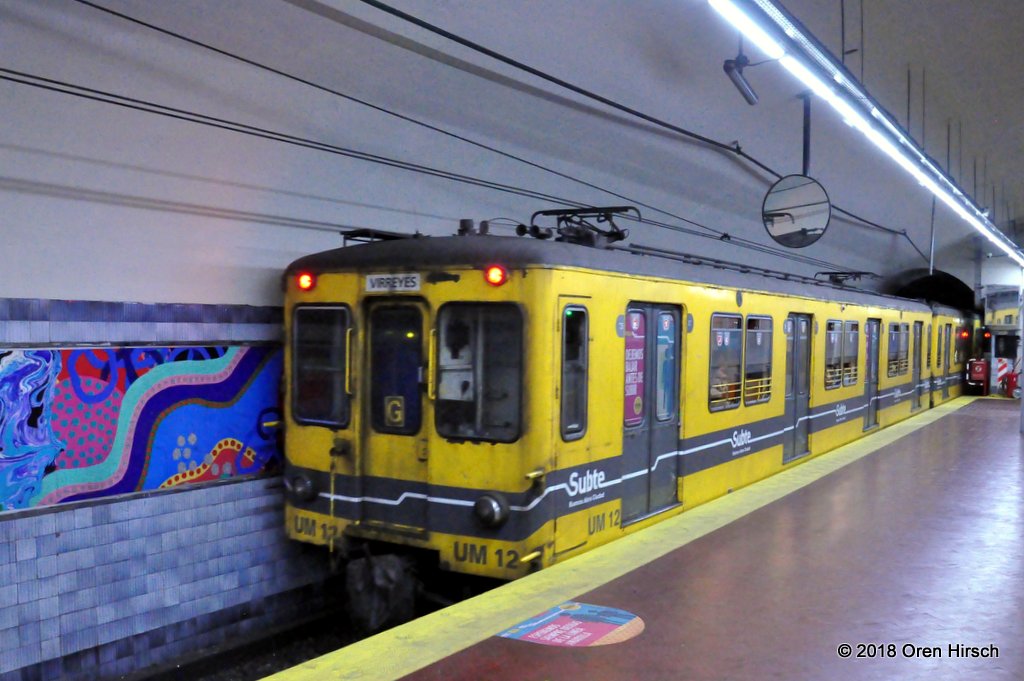
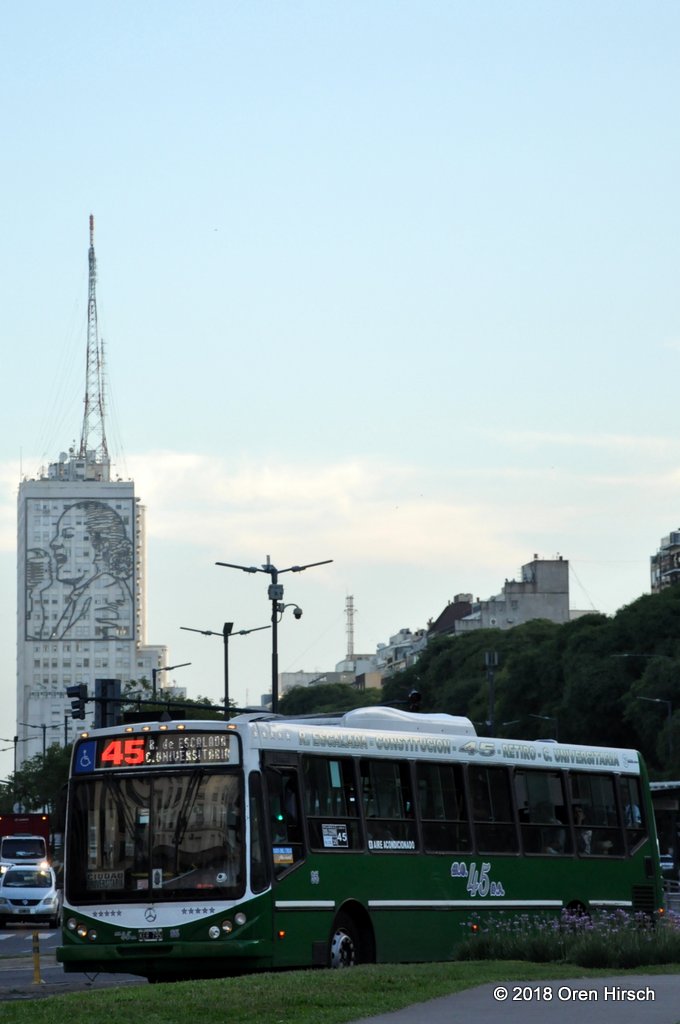
In January, I spent two weeks in Brazil and Argentina.  While I had been to Rio de Janerio back in 2010, I didn’t take any photos of that city’s subway on that trip.  That has changed, and there is now a Rio Metro page here on Oren’s Transit Page.  There are also additions to the existing Rio bus page.  After Rio, I was in Iguazu Falls, where I had also been in 2010, but there are no new photos from here.  The following stop was Buenos Aires, marking my first time in that city, and I have plenty of photos from that city.  The Buenos Aires Subte (Underground), while small, has a rich history and also has the distinction of serving the southernmost subway station in the world.  You might recognize some of the 6000 Series cars on the Buenos Aires pages from Madrid and that would make sense, as Buenos Aires bought them secondhand from the Spanish capital.  The network of buses, known locally as colectivos, is an impressive sight to see as they crisscross the city in just about every imaginable direction.  Each colectivo line is operated by a private firm, and each private firm only operates a handful of lines at most.  The buses on each route have unique liveries to make identification by waiting passengers easier.  

At the end of January, I was in the Boston area for a weekend, and at the start of April I spent a weekend in Minneapolis-St. Paul.

As is often the case, I also added a number of photos from around the DC area.  Most of the new photos are additions to pre-existing galleries, but I also finally added photos of Shuttle UM, the campus bus system for the University of Maryland-College Park, and Loundoun County Transit.

Below, you’ll find a complete list of pages with new photos.  Enjoy! 


Oren’s Reading List: Total MUNI 2018

As an almost perfect followup to last week’s post about riding an entire system in a day, I was alerted to a recent attempt by two San Francisco Chronicle writers, Peter Hartlaub and Heather Knight, who set out on what they called “Total MUNI 2018.”  Spurred by Knight’s 4 year old son’s interest in buses, she and Hartlaub set out to ride every MUNI line in a single day.  They were not the first to attempt the feat.  Larry Baer, who is now the CEO of the San Francisco Giants, and his friend Andrew Coblentz rode every route on a bit of a lark back in 1980, and both Total MUNI veterans provided guidance and support to Hartlaub and Knight.  Baer (and Giants’ mascot Lou Seal) even joined Hartlaub and Knight on a historic F Line streetcar

As is often the case with these sorts of adventures, there is a certain amount of controversy vis a vis the methodology by which one is deemed to have been on an entire system.  For example, I have a friend who says my claim to have been to have been to every DC Metrorail station isn’t really credible since I have not paid a fare at each and every station (I disagree with her). When Baer and Coblentz were planning their adventure in 1980, they decided that one had to ride on a vehicle for at least three stops in order for it to count as riding a route.  In one of the podcasts Hartlaub and Knight did prior to Total MUNI, Baer explained that three stops felt like a good minimum since it felt like you were actually going somewhere.  I agree with that standard.  However, Hartlaub and Knight (with Baer’s endorsement) decided they could use other modes of transit besides walking to get from route to route if necessary, including Uber, Lyft, rides from friends, and even a rickshaw, and I have to raise issue with this.  While I certainly won’t take away from their achievement, I think it would be more remarkable to ride every MUNI route in a day AND not use any other modes of transit to do so.

If you’re interested in learning more about Total MUNI 2018, you can read a recap on the San Francisco Chronicle website (a search of “Total MUNI” on the Chronicle website turns up other articles about the quest to ride each MUNI route in a day.  You can also listen to Hartlaub and Knight discussing their preparations for Total MUNI 2018 and recapping after the fact on “The Big Event” podcast, available through iTunes.

Have you ever done an adventure like this?  What do you think of the criteria that Hartlaub and Knight used to achieve Total MUNI 2018?  Post an answer to either question in the comments below.

Oren’s Reading List is an occasional feature on The Travelogue in which I share articles that I’ve read that might also be of interest to the readers of this website.

Oren’s Reading List: Riding an entire system in a day

The Vancouver Sun reports that today, a man named Stephen Quinlan intends to ride the entire Vancouver SkyTrain system in about 3 hours, in order to set the Guinness World Record for achieving the feat.  You can read about his preparations here.  I made no effort to set a record while doing so, but I did ride the entire Skytrain in a single day on August 7, 2007, back when it only had two lines and fewer stations.  It isn’t the first system I rode in an entire day, either.  The largest system I rode in a single day is the Washington, DC Metrorail (in 2002, when it only had 83 stations), but I have also explored the entire TTC Subway (2007), San Juan Tren Urbano (2016), Glasgow Underground (2005), Rome Metro (2008), Jerusalem Light Rail (on opening day in 2011) and Haifa Carmelit (2007) in a single day, and did the Tren Urbano, Jerusalem Light Rail, and Carmelit on a single fare.  Needless to say, it is a much easier feat to achieve on a smaller system such as Haifa’s (the smallest subway in the world) as opposed to a city such as London or New York, but that is to be expected.  

Have you ever tried to ride an entire system in one day?  Were you successful?  Were you trying to set any records?  Feel free to post your answers in the comments below!

Oren’s Reading List is an occasional feature on The Travelogue in which I share articles that I’ve read that might also be of interest to the readers of this website.

Bus Photo of the Month: May 2018

Mercedes-Benz O500u-1725

Mercedes-Benz O500u-1725

Location: Libertad at Tucuman, Buenos Aires, Argentina
Operator of Vehicle: Transportes Santa Fe SACI
Date of Photo: January 10, 2018

Buenos Aires used to be known as the “City of Trams” and had the highest tramway to population ratio in the world.  However, as is the case in many of the world’s cities, the trams were replaced by buses in the 1960s and while the Argentinian capital is home to the oldest subway in South America, that subway covers relatively little ground in this dense but sprawling city.  The subway’s utility is further diminished by its relatively limited operating hours (the last trains leave their origins just after many Portenos sit down to dinner).  Fortunately, there is an extensive network of buses, known as colectivos, that provide the bulk of the public transit service in Buenos Aires.  These colectivos are privately owned and operated and receive no government funding aside from highly subsidized fuel.  Each operator operates a single line or a handful of lines, and their buses are painted differently in order to distinguish the various companies from each other, such as the brown and gold livery seen here.  As a result, you get a very colorful cavalcade of buses on any major street.  This bus operates on Line 39, which serves Avenida Santa Fe, one of the most important thoroughfares, though at this point in its route it is in front of the Teatro Colon, the premiere opera house in Buenos Aires with seating for nearly 2,500 people in its main hall.  Like all colectivos in Buenos Aires, Line 39 operates 24 hours a day, 7 days a week.

For more photos of Buenos Aires Colectivos, please click here

Rail Photo of the Month: May 2018

AEM-7 2302

AEM-7 2302

Location: Temple University Station, Philadelphia, PA
Operator of Vehicle: Southeastern Pennsylvania Transit Authority
Date of Photo: April 19, 2012

The AEM-7 electric locomotive was a mainstay on Amtrak’s Northeast Corridor as well as on SEPTA and MARC commuter rail trains for over 35 years.  Nowadays, SEPTA is the only agency that still operates these locomotives, and even in the Philadelphia area their days are numbered.  SEPTA is currently testing its first ACS-64 locomotive and upon the delivery and acceptance of all 15 of these locomotives, the AEM-7 locomotives will be retired.  Affectionately nicknamed “toasters”, these locomotives outlived the newer and more powerful HHP-8 locomotives that were introduced at the start of the 21st century, proving that in some circumstances, older can be better.

For more photos of SEPTA Regional Rail rolling stock, please click here